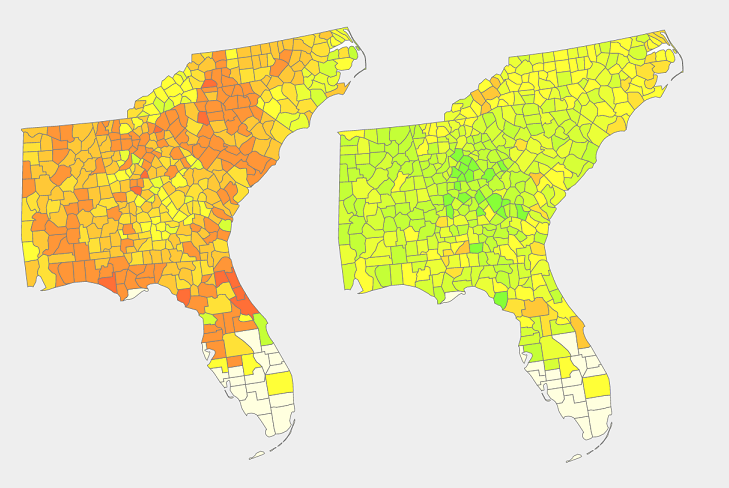
County Maps:

AgroClimate Home A Service of the Southeast Climate Consortium

Current Climate Phase: La Niña

La Niña develops as the Pacific Ocean continues a rapid transition.

Climate and El Niño

What are El Niño and La Niña?

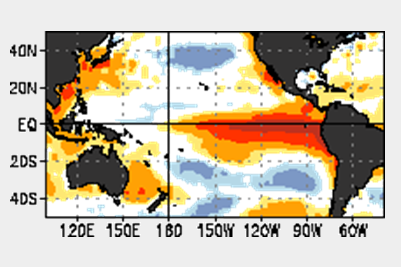
El Niño is a warming of the ocean surface along the equator in the Pacific. During a strong El Niño, surface temperatures can rise as much as 15°F above normal from the coast of Peru across the central Pacific. The heat and humidity from El Niño changes global atmospheric circulation and disrupts weather and climate patterns in many regions around the world.

During a La Niña, the same region of the Pacific Ocean cools. Though the temperature change is usually not as drastic, La Niña occurs just as frequently as the better-known El Niño.

Neutral is the term used when neither El Niño nor La Niña is present in the Pacific. About half of all years are classified as neutral years.

El Niño and La Niña events tend to repeat roughly every four to seven years, although one is not always followed by the other. The impacts of El Niño and La Niña are highlighted in the U.S. Climate Variations and Southeast Climate Variations sections of this site.

Image shows the unusual warming of the tropical Pacific during the 1997 El Niño (top left) and abnormal cooling during the last La Niña (bottom right),courtesy of NASA.

Climate Versus Weather

Climate is the long-term (monthly or longer) pattern of weather conditions in a region. Climate is not the same as weather.

Weather deals with the short-term movement and development of individual weather systems (fronts, cyclones, air masses).

The earth's climate is a dynamic system, with regional variations on many different time scales from seasonal, to year-to-year, up to decades and even longer.